

Recent severe weather events have caused unprecedented devastation across North Carolina. From catastrophic hurricanes to tropical storms to extreme heat, climate impacts are affecting daily lives, including for women and families.
But there is hope for more resilient communities — and ways health professionals and others in our communities can help. This was the message of the second Climate Action Day held on Earth Day, April 22, that was organized by the Climate Action Collaborative to Promote Reproductive Health (CACRH) based in the Duke Department of Obstetrics and Gynecology.
“Climate impacts maternal health. This Earth Day is a teach-in for us as ob/gyns. We have a responsibility to learn more and do more for resilience in our communities,” said Beverly Gray, MD.
Extreme heat is emerging as a major threat, with difficult realities for women: some living in mobile homes where indoor temperatures can exceed outdoor heat; families facing $800 monthly power bills or choosing between electricity and food; women laboring in temperatures above 90 degrees; and pregnant women at increased risk for heat-related illness.
Keynote speaker Ashley Ward, PhD, director of Duke’s Heat Policy Innovation Hub, has seen these impacts firsthand. Her work connects scientists and communities to develop policy solutions that reduce heat-related health risks.
“Women’s health requires us to see the whole person. Think about how women are trying to stay healthy — and also that they are trying to live, earn and care for others. Can we imagine a world where a woman and her family don’t have to sit outside of their unairconditioned mobile home until late evening hours to postpone being confined to miserable, stifling indoor temperatures for as long as possible — after having worked all day? Or where they aren’t faced with choosing between rationing energy use and paying bills or purchasing medication? Heat belongs at the center of women’s well-being,” Dr. Ward said.
Dr. Ward outlined ways clinicians and communities can respond. She called for integrating heat into routine care and expanding how providers assess risk.
“This issue belongs to all of us, and it belongs in maternal and women’s health,” she said. “Resilience is not endurance. Resilience involves communicating earlier, flagging high-risk patients, training how heat worsens vulnerability and doing more.”
She emphasized that solutions must extend beyond clinical settings to address broader social conditions.
“A home might be unsafe; a hospital might be too far away for a woman. We have to connect with others in our communities — labor, housing, violence prevention,” Dr. Ward said.
Programs such as Cooling Communities, which partner with faith-based organizations, show how local efforts can help families manage extreme heat. Simple interventions — like distributing magnets with heat safety tips for patients who can’t access information online — can also make a difference. Dr. Ward highlighted research and interventions that are available online at the Heat Policy Innovation Hub.
She underscored the need to broaden the conversation beyond health care alone.
“Heat moves across and through all aspects of our lives. There isn’t a part of life that heat doesn’t touch. Heat might have pushed a woman to choose between power and groceries, cost her sleep, added stress to her life. The health sector can’t carry this burden alone. We should widen the frame to women’s well-being. It’s not just health outcomes, it’s also socioeconomic structures,” Ward said.
Following the keynote, a panel explored recent severe weather events in North Carolina, with disaster preparedness and response lessons.
Dev Sangvai, MD, MBA, secretary of the North Carolina Department of Health and Human Services, described the scale and scope of disaster response for the state.
“We are looking at what is happening in 100 different counties,” Secretary Sangvai said. During Hurricane Helene, he noted, 23,000 individuals required electricity. “When the power goes out, those are the people we think about.”
Jason Zivica, MHS, assistant vice president for Workplace Violence Prevention and Emergency Preparedness at Duke University Health System, shared on-the-ground experiences.
“During Hurricane Helene, I got a call for help. The state operations center didn’t have the ability to communicate with health care organizations in the affected regions of the North Carolina mountains. Our job was to perform site assessments and determine any needs for hospitals and long-term care facilities. We linked up with the National Guard to fly out to sites who had no support or communications in some cases for days,” Zivica said.
He described a long-term care facility left without power.
“There were three nurses and a custodian — there was no one to help this team. These things were happening right down the road from us,” Zivica said. “I have seen the great that our organization does, sending supplies and people to communities in need.”
Love Anderson, co-founder of Breastfeeding Family Friendly Communities, spoke poignantly about infant and young child feeding in emergencies and the growing frequency of disasters.
“With climate change, natural disasters and emergencies are becoming more common. Infant feeding is a life-safety issue during these times. Breastfeeding is a universal buffer — essential in disaster response,” she said.
The panel discussion concluded with remarks from Eugene Washington, MD, MPH, MSc, chancellor emeritus and professor at Duke, who highlighted the importance of creativity and resourcefulness in strengthening preparedness and building resilience in communities. Across the event, speakers emphasized that while extreme weather is intensifying, coordinated action with others can help promote the health and well-being of women, infants and families.
Climate Action Day 2026
-
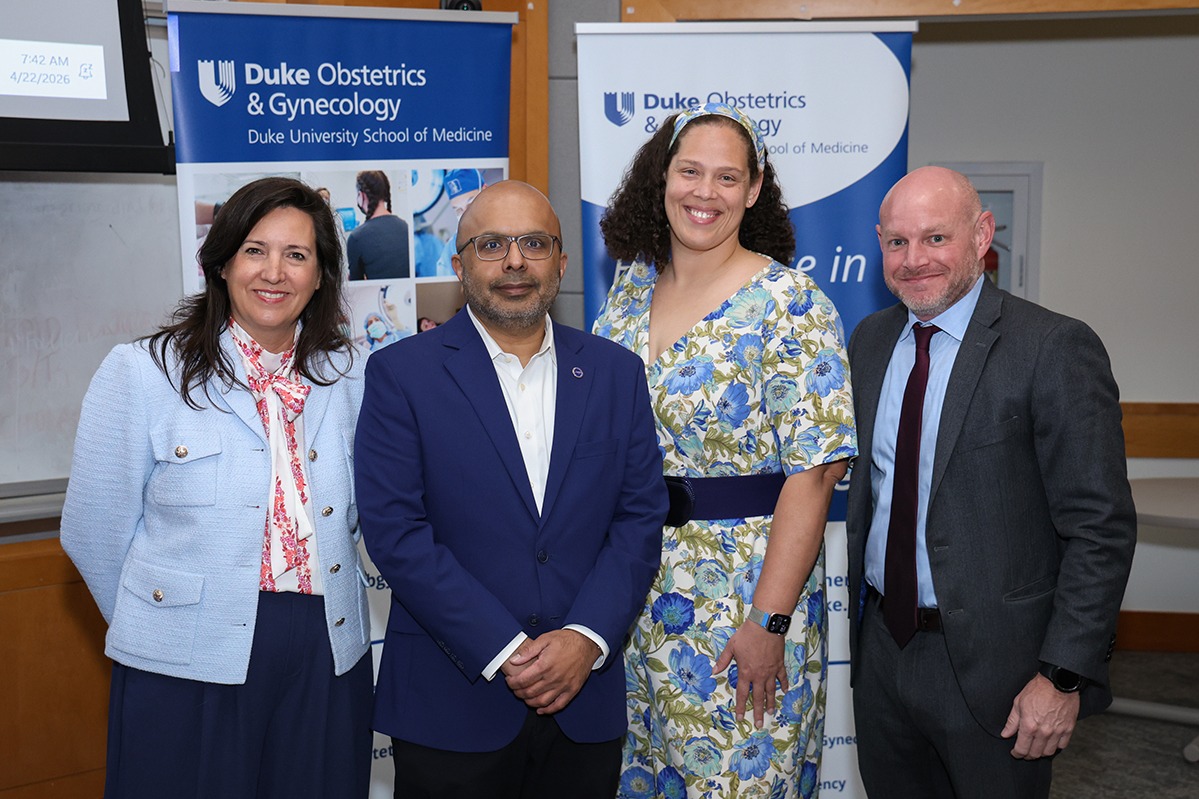 Keynote speaker Ashley Ward, PhD; with panelists Dev Sangvai, MD, MBA; Love Anderson; and Jason Zivica, MHS.
 -
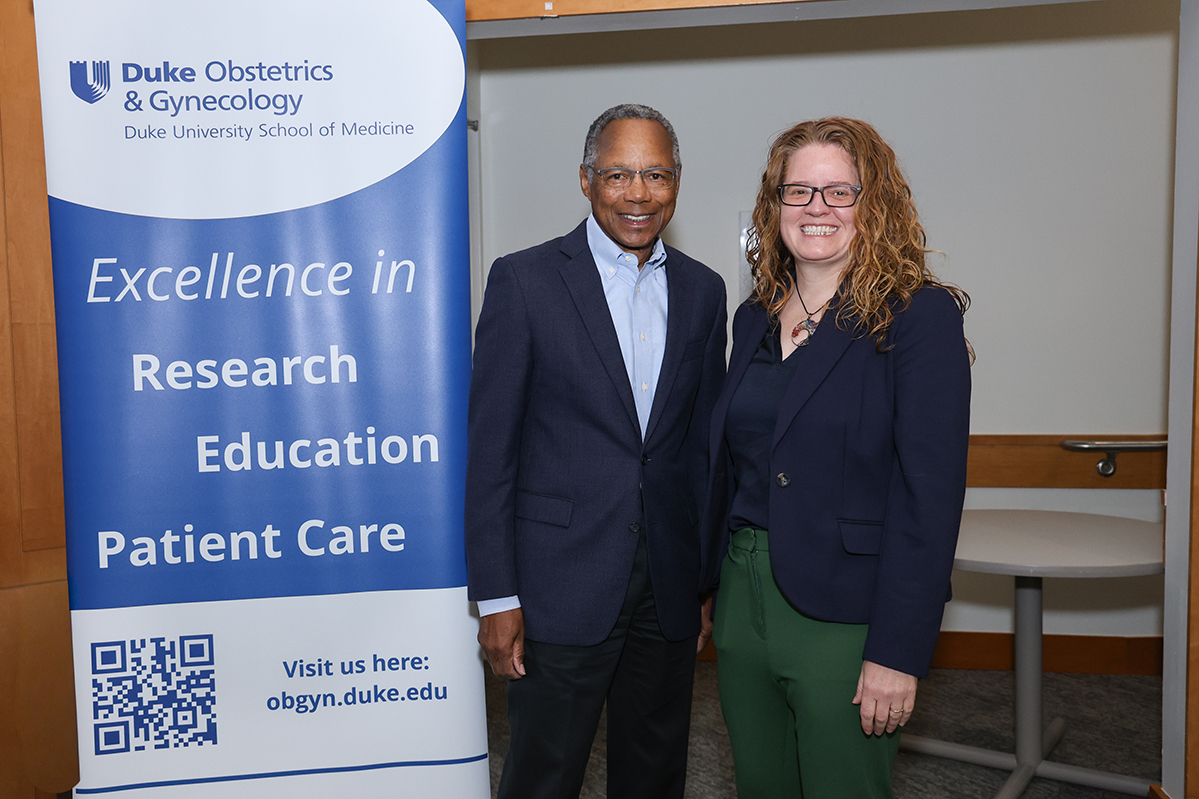 Eugene Washington, MD, MPH, MSc, chancellor emeritus and professor at Duke, and Beverly Gray, MD.
 -
 Eugene Washington, MD, MPH, MSc, chancellor emeritus and professor at Duke, and Vice Chair for Research Danny Schust, MD.
 -
 Jason Zivica, MHS, assistant vice president for Workplace Violence Prevention and Emergency Preparedness at Duke University Health System.
 -
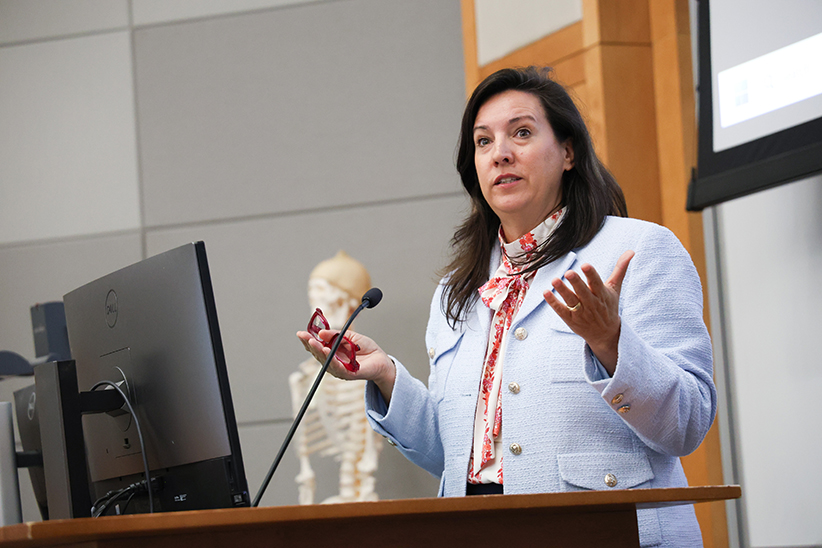 Keynote speaker Ashley Ward, PhD, director of Duke’s Heat Policy Innovation Hub, delivering the keynote presenation.
 -
 Dev Sangvai, MD, MBA, secretary of the North Carolina Department of Health and Human Services, described the scale and scope of disaster response for the state.


Duke’s Climate Action Collaborative to Promote Reproductive Health (CACRH)
The perioperative subcommittee of Duke’s Climate Action Collaborative to Promote Reproductive Health (CACRH) is advancing initiatives to improve sustainability in clinical care.
- Reducing plastic usage: A project led by former fellow Joseph Lafferty, MD, focused on transitioning to metal speculums — reducing the ordering of plastic speculums from 11,000 to 0.
- Identifying best practices: The subcommittee is conducting a review to develop a toolkit for sustainable operating room practices, with a continued emphasis on patient safety, clinical excellence and potential cost savings.
- Reducing operating room waste: A “red bag” initiative aims to ensure only appropriate materials are placed in biohazard bags, which generate three times the carbon emissions of regular waste and are more costly to process.
- Communicating best practices: The group will share regular “sustainability pearls” with practical guidance. Example: single-use blue scrub caps can take 20 to 30 years to biodegrade and break down into microplastics, making reusable caps a more sustainable option.