
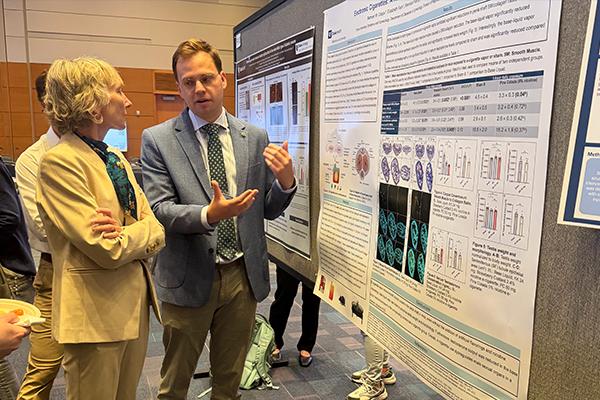
It is well-recognized by urologists and urogynecologists that obesity and metabolic dysfunction are key factors driving the development of urologic conditions. These include kidney stones, overactive bladder and urinary incontinence, sexual dysfunction, urinary tract infections, benign prostatic hyperplasia (enlarged prostate) and associated lower urinary tract symptoms.
Duke’s 11th Multidisciplinary Benign Urology Research Symposium provided a forum for laboratory-based and translational scientists from specialties with an interest in metabolic dysfunction to present the latest research and advancements.
“Specialists in endocrinology, comparative biosciences, reproductive sciences, regenerative medicine, physiology and integrative immunobiology had opportunities to interact with clinicians and to discuss the various mechanistic pathways in which therapies may target metabolic dysfunction and obesity — including the potential role of GLP-1 receptor agonist therapy,” said Duke urogynecologist Cindy Amundsen, MD, KURe principal investigator and program director.
The annual K12 Urologic Research Career Development Program (KURe) Benign Urology Symposium brought together an international community of researchers, clinicians and trainees on April 17 at Duke University's Trent Semans Great Hall. With a focus on Urogenital Pain and Effects of Obesity on Urogenital Conditions, the symposium welcomed more than 100 attendees representing 18 institutions across the U.S. and Canada. Participants came from over 30 departments, including urology, biomedical engineering, geriatrics, integrative immunobiology, biostatistics and endocrinology. Engaging presentations, an interactive poster session with time for networking and conversations and lunch with experts created an atmosphere supporting collaboration and learning.
Top abstract awardees Fernando Pereira Beserra, PhD (University of Colorado), Joseph Yang (Duke University) and Seth Teplitsky, MD (Duke University) were invited to share their work through podium presentations.
Samuel Cripps, PhD, Duke Ob/Gyn Division of Reproductive Sciences, earned best basic science poster for his study on electronic cigarettes (e-cigarettes) and erectile dysfunction. Dr. Cripps is mentored by Margeaux Marbrey, PhD. Nyemkuna Fortingo, MD (Virginia Commonwealth University) won best translational science poster for her work on near-infrared spectroscopy to detect variations in bladder hemodynamics, and Vandanaa Jayaprakash, BS (Virginia Commonwealth University) was awarded best clinical science poster for her investigation of complication rates in transvaginal versus transurethral management using urethral mesh.
In addition, 12 trainees received Collaborating for the Advancement of Interdisciplinary Research in Benign Urology (CAIRIBU) Travel Awards, giving them the opportunity to present their research during the poster session and connect with a highly engaged, collaborative community.
-
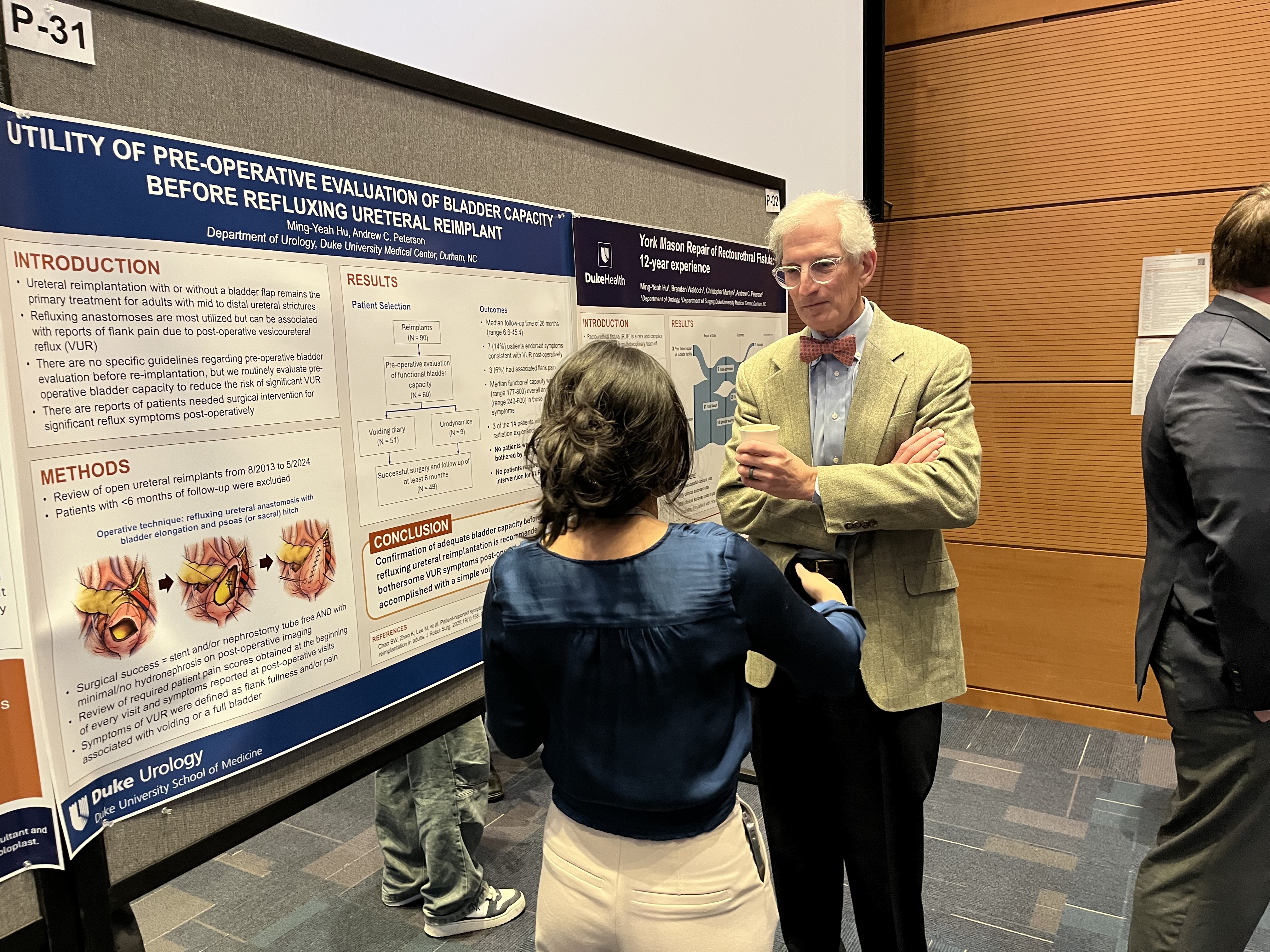 Duke pediatric urologist and KURe mentor John Weiner, MD, at the poster session.
 -
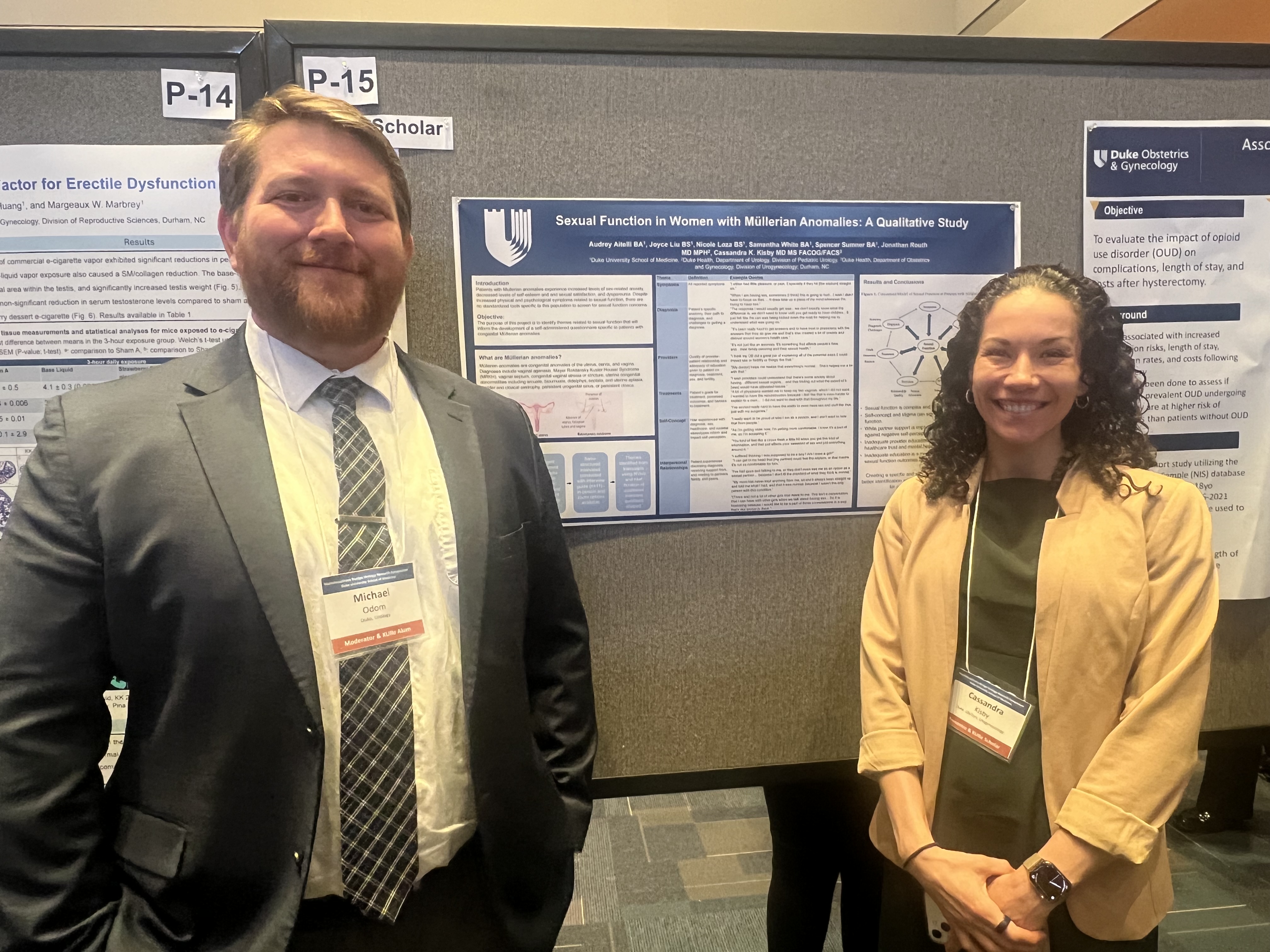 KURe panel moderator and program alumnus Michael Odom (Duke Urology faculty) with current KURe scholar Cassandra Kisby, MD, MS (Duke Ob/Gyn faculty).

