

Breastfeeding can offer important health benefits, but pain, feeding difficulties, medical concerns, work demands, and conflicting information can leave families unsure of where to turn. Across Duke Health, prenatal educators, hospital teams, clinicians, specialists, lactation consultants and community programs are working together to make support easier to find.
Support must extend beyond a single appointment or point in a patient’s care — it requires coordination among prenatal educators, hospital teams, primary care clinicians, specialists, lactation consultants and community programs. “At Duke, we believe every family deserves individualized support, practical guidance, and a care team that partners with them every step of their feeding journey," said Andrea “Annie” Dotson, MD, FAAFP, IBCLC, MSPH, NABBLM-C.
Bringing Current Evidence into Clinical Practice
Duke Primary Care and Family Medicine recently launched Milk & Cookies: Lactation and Breastfeeding Medicine Grand Rounds, a yearlong educational series focused on breastfeeding and lactation care. Developed by Dr. Dotson, a Duke family medicine physician with specialized training and certification in breastfeeding and lactation medicine, and Jessica Luginbuhl, MPH, IBCLC, the collaborative series helps clinicians stay current on evolving protocols, strengthen practical skills, and better understand when and where to refer patients for additional support.
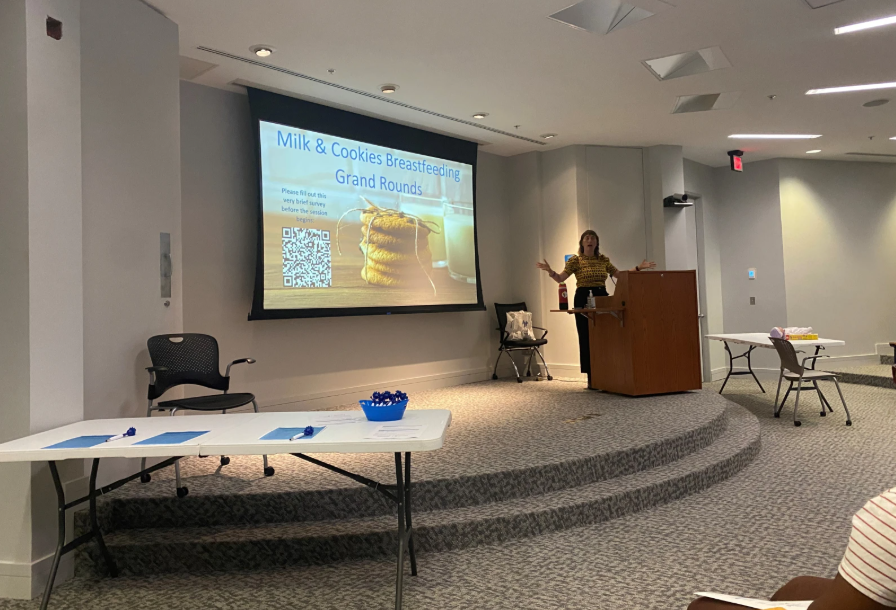
Giovana Pinheiro, MD, championed the development of Milk & Cookies, transforming it from an idea into a full residency project and ongoing educational series. A robust planning team of International Board-Certified Lactation Consultants works behind the scenes to bring the program to life, including Sally Warren, MSN, RN, IBCLC; Nicola Young, MD, IBCLC; Michelle Bae, MSN, RN, IBCLC; and Karen Granger, RN, IBCLC. The series has also received strong, sustained support from Duke Primary Care and Duke Family Medicine leadership.
Alternating virtual sessions and in-person workshops combine emerging research and updated protocols with practical skills, referral guidance, and preparation for complex situations, including infant feeding during emergencies.
The series began with multidisciplinary programming on ankyloglossia, or tongue-tie, bringing together experts from family medicine, otolaryngology, dentistry and speech-language pathology for a virtual session and hands-on workshop.
The next in-person session takes place on Thu., Sept. 10, from 5:30-7 p.m. featuring a hands-on lymphatic drainage massage workshop led by Ellen Chetwynd, PhD, MPH, IBCLC, and Jessica Luginbuhl, MPH, IBCLC. Each session offers 1.0 continuing education credit, including 0.1 IACET CEU.
Why Early Support Matters
The earliest postpartum days can be especially important for families who hope to breastfeed. According to Luginbuhl, reaching a patient between approximately day two and day seven after delivery can make a meaningful difference in breastfeeding outcomes. During this period, families may be navigating pain, concerns about milk supply, uncertainty about feeding, and conflicting advice. Without timely help, challenges can become harder to correct.
One important example is Duke Primary Care’s pediatric network: each pediatric-specific DPC clinic has an International Board-Certified Lactation Consultant embedded within the practice. This distinctive model gives families more direct access to specialized breastfeeding support as part of their child’s routine care. Duke is also home to the state's busiest Breastfeeding Medicine clinic, led by Dr. Dotson, providing comprehensive medical evaluation and treatment for complex breastfeeding and lactation concerns for infants and parents.
As breastfeeding research evolves, resources such as the Academy of Breastfeeding Medicine’s clinical protocols can help clinicians stay current. Mastitis care is one example: updated guidance distinguishes inflammation from bacterial infection and may initially recommend ice, anti-inflammatory medication, and rest, depending on the patient’s symptoms and clinical assessment. Milk & Cookies helps translate this evolving evidence into practical knowledge clinicians can use in patient conversations. The program is intended to help close that information gap by translating evolving evidence into practical knowledge clinicians can use in patient conversations.
Learn more about Duke Health breastfeeding and lactation services
Preparing Families Before and After Baby Arrives
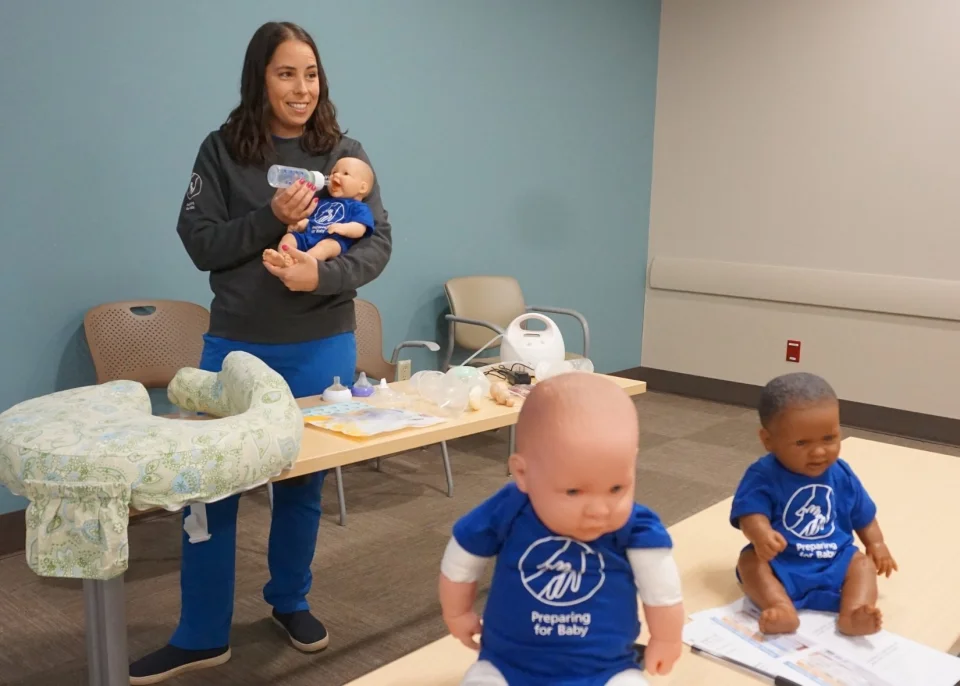
Breastfeeding education is also an important part of Duke’s broader prenatal and postpartum programming. As Nursing Program Manager for Women’s Services, Jacqueline Lawdley, BSN, RN, leads the Preparing for Baby program, which provides education for expectant parents through recorded resources, live virtual classes, and in-person sessions. The program’s online resources reach thousands of families each year and include Spanish-language options to make education more accessible.
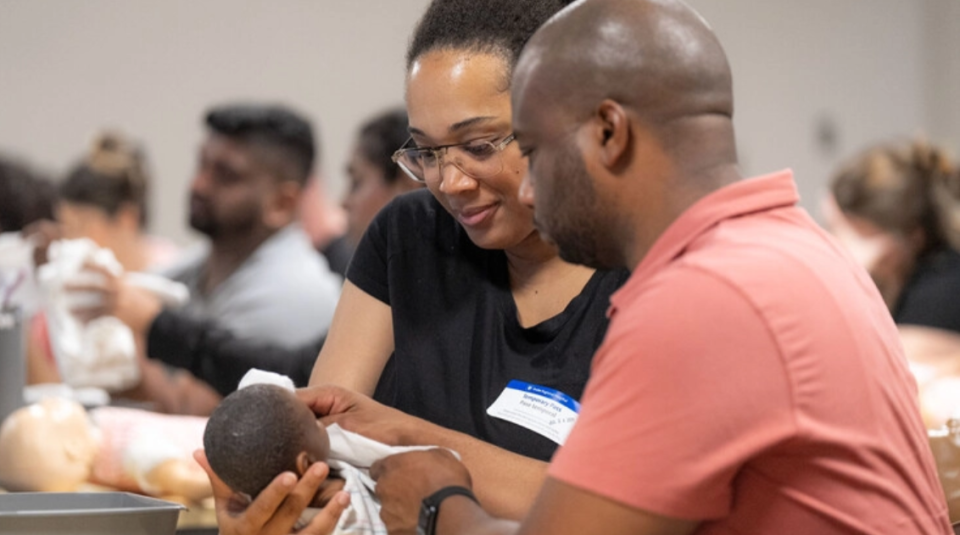
The program offers core classes on labor and postpartum care, cesarean delivery and postpartum care, and newborn care. Families can also participate in hands-on workshops covering breastfeeding, pumping and returning to work, labor coping, newborn skills, newborn safety, and family CPR. Support continues after delivery through Baby Bistro, a weekly drop-in lactation support group, as well as additional programming designed to help new parents build confidence and community.
Read more about Jacqueline Lawdley and her work with the Preparing for Baby program.
Preparing for Baby resources are also being integrated into education delivered to Duke OB patients through MyChart, helping families receive relevant information throughout pregnancy. These resources can be accessed on the Duke Health Pregnancy Care Journey website.
Improving Care Through Collaboration
Breastfeeding support at Duke reaches across departments, facilities, and professional disciplines. At Duke Regional Hospital, Melissa Irene Shaw, BSN, RN, IBCLC, provides specialized expertise as a Clinical Nurse IV in Mother Baby/GYN Services. She has also contributed to broader maternal and infant quality-improvement work alongside colleagues from Women’s Services, family medicine, maternal-fetal medicine, neonatal care, nursing leadership, and quality and safety.
Shaw and Lawdley were among the team members recognized when Duke Health received the 2024 Perinatal Quality Collaborative of North Carolina Quality Improvement Award. The award honored sustained improvements achieved through work related to maternal sepsis, care of late-preterm infants, and maternal cardiac care.
Although breastfeeding was not the sole focus of that recognition, the work reflects the same principle guiding Duke’s lactation efforts: better maternal and infant outcomes depend on teams sharing expertise, removing silos, and connecting care across settings.
That spirit of collaboration is also central to Milk & Cookies. The series creates opportunities for family medicine, primary care, OB-GYN, pediatrics, dentistry, otolaryngology, speech-language pathology, nursing, and lactation professionals to learn from one another and develop more consistent approaches to patient care. Milk & Cookies brings clinicians together to stay current on breastfeeding and lactation care.
Support must extend beyond a single appointment or point in a patient’s care—it requires coordination among prenatal educators, hospital teams, primary care clinicians, specialists, lactation consultants, and community programs. At Duke, we believe every family deserves individualized support, practical guidance, and a care team that partners with them every step of their feeding journey," — Andrea “Annie” Dotson, MD, FAAFP, IBCLC, MSPH, NABBLM-C.