In This Section
More Access, More Education, More Empowerment: New Duke Pregnancy Care Journey Launches

In the fall of 2023, the Duke Department of Obstetrics and Gynecology embarked on a patient-centered, visionary project: the implementation of a tailored obstetrics care model with fewer in-person visits for average-risk pregnant patients. Improving patient satisfaction and increasing access to care were among the key goals of the new visit model — the Duke Ob/Gyn Pregnancy Care Journey. It launched in February 2025 at the Duke Women’s Health Associates (DWHA) practice, and in September 2025, the new visit model expanded to all general ob/gyn clinics departmentwide.
Patient scheduling for the initial phase of the Pregnancy Care Journey project started at DWHA after nearly two years of strategic collaboration between the department, the Duke Health Integrated Practice (DHIP) and Duke University Health System (DUHS). Simultaneously, pregnant patients at all Duke Ob/Gyn clinics began receiving newly organized and expanded patient education — delivered digitally via MyChart at intervals based on gestational age.
“The Pregnancy Care Journey offers an in-person visit schedule modified to accommodate patients based on their medical needs and individual preferences. Data from similar altered visit models show equivalent maternal and neonatal outcomes and overall good patient satisfaction compared to a traditional visit schedule,” said Corey Bolac, MD, division chief of DWHA and project lead. “Our care model provides patients with more valuable in person visits and enhanced digital education resources in English and Spanish that patients can review regularly at their convenience.”Dr. Bolac noted that implementation of the flexible visit schedule improves clinic access by opening appointments for other patients with urgent needs and expanding access for routine gynecologic care.
"Our teams came together to create a comprehensive educational resource page for ob/gyn patients at Duke Health. Because of the vast amount of information shared with obstetric patients via Duke’s digital platforms, we needed a multilevel website that enables a positive user experience. Based on this collaboration, we were able to build our most sophisticated resource page to date, and it will allow us to connect our patients with specific education during each phase of their pregnancy.”
— Jennifer Maddocks, PT, MMCi, CPXP
Director, Duke Health Technology Solutions Digital Strategy Office
— Josh Thomas, MMCi
Product Owner, Duke Health Technology Solutions Digital Strategy Office
The Pregnancy Care Journey aligns with a 2025 clinical consensus published by the American College of Obstetrics and Gynecology (ACOG): “Tailored Prenatal Care Delivery for Pregnant Individuals.” The consensus states, “…evidence shows that health care professionals can individualize care delivery for average or low-risk patients so that they have fewer in-person visits and use other care modalities. The new approach would give pregnant patients and their ob/gyns or other maternity care clinicians the ability to develop prenatal care plans based on medical, structural and social determinants of health and patient preferences, rather than using the traditional one-size-fits-all model.”
"Our priority is empowering all patients to be educated and comfortable with their pregnancy and their health journey, and to be able to access tools that will guide them. The Pregnancy Care Journey helps us meet these goals and augment clinic access strategically.”
— Brenna L. Hughes, MD, MSc
Interim Chair and Maternal-Fetal Medicine Specialist, Duke Ob/Gyn
Pregnancy Care Journey Visit Schedules and Education
At their initial obstetric intake visit, patients are assigned to a prenatal visit schedule based on medical criteria and personal preferences. Average-risk patients are enrolled in a tailored visit schedule model. The visit schedule can be modified based on risk assessment by providers throughout the pregnancy.
The intake visit also triggers the Pregnancy Care Journey’s educational component. Five content bundles are delivered through MyChart at approximately 8, 16, 20, 28 and 34 weeks of pregnancy. Patients also have options to learn through live or pre-recorded classes taught by a DUHS Women’s Services registered nurse educator, accommodating the patient’s scheduling needs. In addition to having resources available at their convenience, patients receive regularly scheduled reminders about materials to read, videos to watch and Duke’s Preparing for Baby pregnancy education series.
Comprehensive education encompasses topics such as “What to Expect at Your Prenatal Visits” and “Vaccines in Pregnancy.” Mental health and community resources are included, as well as breastfeeding education.
If a pregnancy does not progress, flags in the electronic health record (EHR) are utilized for scheduling modifications, changes in pregnancy status and other specific circumstances. According to ACOG, early pregnancy loss is common, occurring in 10% of all clinically recognized pregnancies. Approximately 80% of all cases of pregnancy loss occur within the first trimester. Therefore, project stakeholders required functionality to discontinue the delivery of educational material if necessary.
"I was brought into the project to help develop a digital solution to deliver the Pregnancy Care Journey education. The project team was resolute with a clear sense of purpose, which gave me incentive to find a solution and deliver good patient experiences. The initial go-live was built by a third-party vendor but then converted to Care Companion, an Epic product. We have had excellent patient engagement rates with Care Companion! It’s fantastic to see one’s work positively impact patient care.”
— Ellen Thoresen
Product Owner, Digital Care Digital Strategy Office, Duke Health Technology Solutions
From Vision to Fruition
Under the guidance of Duke Ob/Gyn Project Manager Monica Vallier, MBA, an array of coordinated efforts achieved the successful program launch. Among them, extensive collaboration with clinical and leadership teams, curation of educational materials and a robust website with content in English and Spanish, partnering with the Duke Digital Strategy Office (DSO), data tracking, clinical team engagement and partnership with marketing and communications teams.
A key component of the Pregnancy Care Journey is its comprehensive patient education housed on the Duke Ob/Gyn Care Coach website. The initial iteration of the project’s website was developed by the Duke Ob/Gyn communications team and hosted on the Duke School of Medicine’s website platform. This site provided functionality necessary to launch the educational platform within the project timeline, but it did not offer a patient-facing platform hosted by and branded as Duke Health.
"Providing a variety of options through which patients can learn and engage offers flexibility and opportunities that benefit our patients.”
— Jacqueline Lawdley, BSN, RNC-MNN
Nursing Program Manager, Women’s Services
The newly launched resource site, developed in partnership with DSO, required a customized build that preserves the original functionality and enhances the user experience. All content is approved by the Duke Patient Education Governance Council, and the resource site now serves as a centralized repository, easily accessible to patients and providers and hosted by Duke Health Technology Solutions (DHTS). The objective of the Pregnancy Care Journey aligns with the goals of the Duke Health Clinical Enterprise Strategic Plan’s “Forge Our Digital Future” priority areas:
- Lead in patient-centered care and convenience
- Optimize site of care and create additional clinical capacity
- Serve patients in broader geographies, in their communities and on their schedule
"Duke Ob/Gyn’s comprehensive patient education platform benefits patients and providers. The resources meet the Duke Patient Education Governance Council’s standards and requirements.”
— Jen Klein, MSN, RN, CNML
Clinical Nurse Educator – Patient Education, DUHS Professional Practice
Quality and Safety — Studying the Process
Quality and safety outcomes are being studied and will be shared at the 2026 Charles B. Hammond, MD, Research Day by Duke Ob/Gyn resident Jasmine Arrington, MD, MPH. Key outcomes include visit volumes, obstetrical outcomes, use of educational resources and patient satisfaction.

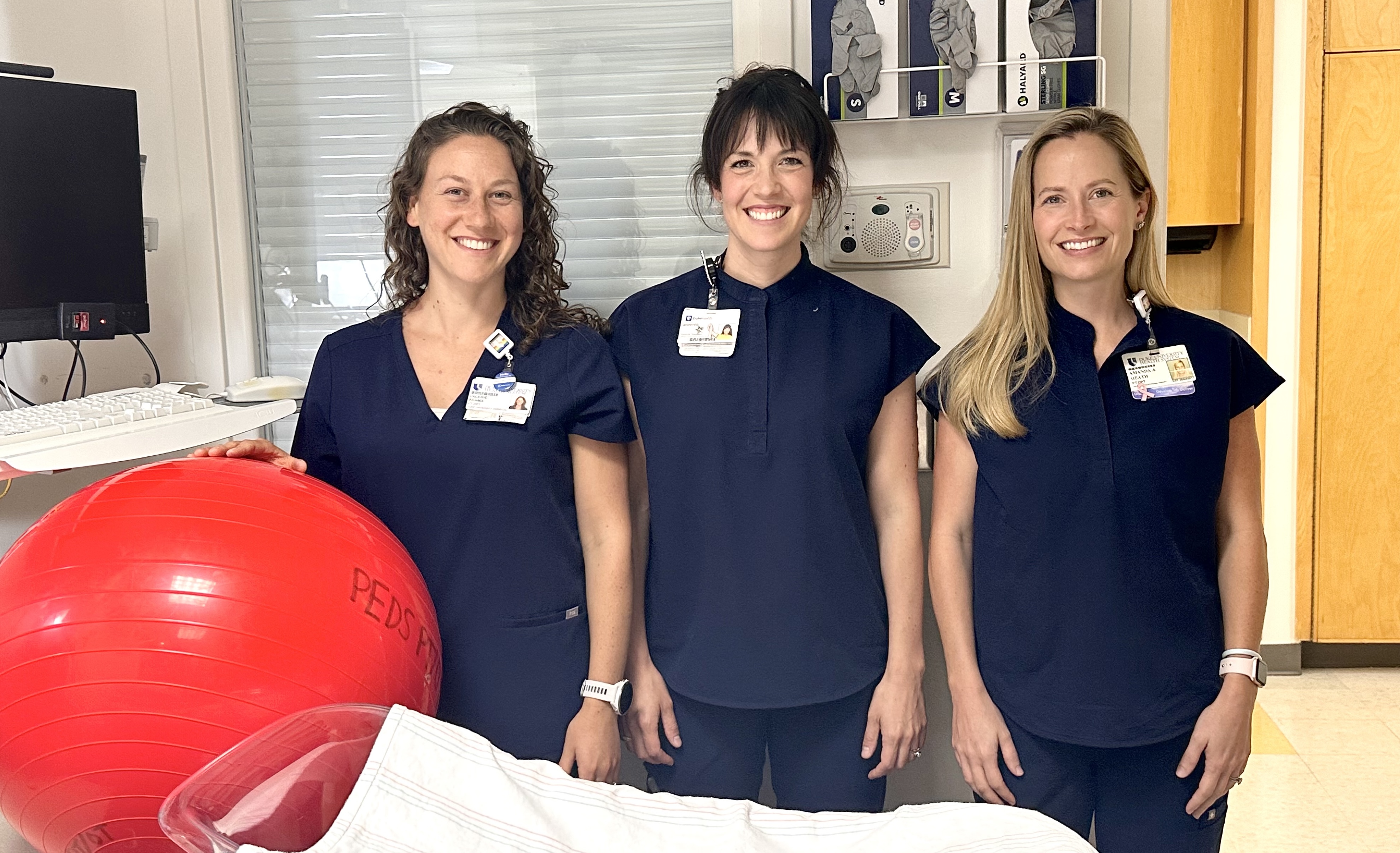
Duke University Health System (DUHS) has successfully implemented an innovative postpartum care model integrating physical therapy directly into inpatient maternity services, with continued support through early postpartum telehealth follow-up. The program was developed to address preventable postpartum readmissions and rising health care costs using real-world implementation data and is now available at Duke University Hospital (DUH) and Duke Regional Hospital (DRH).
The initiative first launched in 2023 as an 18-month pilot program at DUH. The program was designed to evaluate outcomes related to readmission rates, patient experience and cost containment. Clayton Alfonso, MD, associate professor of obstetrics and gynecology, serves as physician lead. Lisa Massa, PT, WCS, and colleagues Jennifer Thornton-Jones, PT, WCS; Amanda Heath, PT, DPT, WCS; Valerie Adams, PT, DPT, WCS; Erick Fink PT, DPT; and Jennifer Trahan, PT, DPT, coordinate the program.
"This came out of direct patient feedback at a six-week postpartum visit asking me why we don’t have physical therapy for our postpartum patients. I reached out to our team and they were excited to have the opportunity to do this. After a few meetings with stakeholders, we were off the ground running. Patients, providers and our postpartum nurses all say this has been a wonderful addition. It has been long overdue for us to recognize how life and body changing having a baby is — whether vaginal or cesarean section — and supporting our new parents to handle those changes to maximize their recovery.”
— Clayton Alfonso, MD
Physician Lead, DUHS Postpartum Physical Therapy Program
Program findings were shared publicly at the 2025 Combined Sections Meeting of the American Physical Therapy Association. At the meeting, Duke’s presenters shared that Duke University Hospital averages approximately 350 deliveries per month. Based on historical postpartum readmission rates of 1-2%, more than 120 readmissions would typically be expected over an 18-month period. During the pilot program, only six postpartum readmissions occurred among patients receiving inpatient physical therapy services combined with early telehealth follow-up, noted Massa, who was instrumental in implementing the pilot and now manages the program.
“Nationally, postpartum occupational and physical therapy services remain uncommon. DUHS currently accounts for two of those programs,” said Dr. Alfonso. “This initiative highlights how interdisciplinary leadership and implementation science can be used to improve maternal care, reduce preventable harm and control health care costs while sharing outcomes transparently with the broader medical community.”
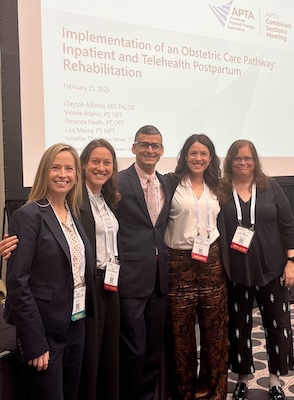
Pictured at the 2025 American Physical Therapy Association Combined Sections Meeting (left to right): Amanda Heath, PT, DPT, WCS; Valerie Adams, PT, DPT, WCS; Clayton Alfonso, MD.; Jennifer Thornton-Jones, PT, WCS; and Lisa Massa, PT, WCS.
"With national average costs of approximately $5,000 to $8,000 associated with each postpartum readmission, DUHS calculated more than $500,000 in avoided hospital costs over the pilot period. Additional benefits included improved patient satisfaction, strong nursing engagement and leadership support. DUH and DRH are now listed in the Pelvic Health Network’s directory of approximately 118 maternity hospitals that offer occupational and physical therapy after birth.”
— Lisa Massa, PT, WCS
Physical Therapy Lead, DUHS Postpartum Physical Therapy Program

Q: The DFC has a dedicated psychological services program integrated into its patient care, which provides guidance and support to patients and their families. Is that unique?
There are only a handful of fertility centers with dedicated psychological service programs. DFC is the only center in the Southeast to have a full-time program that offers integrated psychological support for fertility patients as well as training opportunities for the next generation of reproductive psychologists. Specifically, we are the only center in the country training clinical psychology interns, who are in their final year of earning their PhD, and one of only two centers in the country training clinical psychology postdoctoral fellows in reproductive psychology.
Q: This program includes a collaborative partnership with postdoctoral fellows. How is that beneficial for patients and for training future team members?
Clinically, postdocs provide individual and couples therapy, co-facilitate support groups, offer decision making consults to help patients navigate complex treatment decisions, conduct psychological evaluations of gamete donors and gestational carriers and provide psychoeducation and consultation to gamete recipients and intended parents. Postdocs also collaborate on research and/or quality improvement projects; support program development initiatives; provide supplementary training to clinical psychology interns; and train medical students, ob/gyn residents and nurses in reproductive psychology topics.
"We are caring for fertility patients at a unique moment in history: the number of individuals facing infertility is rising while threats to fertility care access are increasing. Simultaneously myths and misinformation about fertility abound. These include inaccurate information such as ‘egg freezing is an insurance policy,’ ‘fertility treatment always works’ or ‘family-building can be deferred for decades.’ Training the next generation of reproductive psychologists not only expands the number of experts who can provide clinical care and conduct critical research, but it also creates a cohort of health ambassadors who can combat misinformation.”
— Julia Woodward, PhD
Director of Psychological Support Services
"With the growing demand for fertility services, having in-house psychology resources is invaluable. At most other practices, patients are referred externally, or psychological support may not be addressed at all, making this level of access and integration truly rare.”
— Kaitlyn Johnson, BSN, RN
Third Party Nurse Navigator
"Our psychology team serves as a priceless resource to our fertility center patients. This very unique journey is often long, complex and can be heartbreaking, so having an in-house psychology team with this specialty training — who understands the challenges faced by fertility patients — is invaluable, not only to the people we serve, but to our staff as well. From working with a patient who has medical anxiety all the way to complex third party reproduction cases, our psychology team sees it all.”
— Kim Briley, RNC-RHI, CNIV
Third Party Nurse Navigator
Q: The collaboration between DFC and the Department of Psychiatry and Behavioral Sciences is a win-win partnership. What examples demonstrate this?
One great example is the DFC Fertility Support Group, which receives referrals from the postdocs when they are rotating in other clinics across Duke Health and sees patients who would benefit from that service. Other examples include:
- Faster evaluation for fertility patients seeking guidance from perinatal psychiatry colleagues about whether to continue or modify their psychotropic medication use
- The ability to offer clinical insights to Duke Cancer Institute (DCI) clinicians supporting patients making fertility preservation decisions
- Training for ob/gyn residents about trauma-informed care
In late 2025, Duke Fertility Center (DFC) augmented fertility preservation options through ovarian tissue cryopreservation (OTC). Patients with ovaries with a medical condition and/or whose care plan includes chemotherapy, radiation, surgery or procedures that could potentially impact future fertility are candidates for OTC.
OTC may be used to protect reproductive tissue before or after treatment regimens begin. All or a portion of an ovary is removed from the body with a surgery and frozen. In the future, the preserved tissue may be transplanted back into the body, and ovulation and hormone production can resume. Additionally, eggs likely can be collected from the tissue, and matured and fertilized in vitro. Currently, OTC is the only fertility preservation option available to individuals with ovaries who have not yet gone through puberty. Duke is proud to be one of the only institutions in the Southeast providing this advanced service.
“A natural time to connect with our team would be if the patient’s provider for their condition is starting to talk about starting a new treatment,” said Kelly Acharya, MD, reproductive endocrinology and infertility specialist. “That is a good time to have the discussion about whether there may be any predicted fertility impact for that treatment, and then have providers connect with the Duke Fertility Preservation team.”
Dr. Acharya and colleague Tara Streich-Tilles, MD, MPH, co-direct DFC’s Fertility Preservation Program. Dr. Streich-Tilles also serves as director of Duke’s Pediatric and Adolescent Gynecology Program. Together, they help patients and their families understand fertility preservation efforts at Duke Health and work in partnership with the Duke Cancer Institute’s Supportive Care and Survivorship Center.
“We have patient navigators, nurses, social workers, child life specialists and a dedicated team of providers all working together to help with the patient’s fertility journey, and this includes supporting their families,” said Dr. Streich-Tilles.